

































































































































AI Scientists? How Machines Are Redefining Discovery

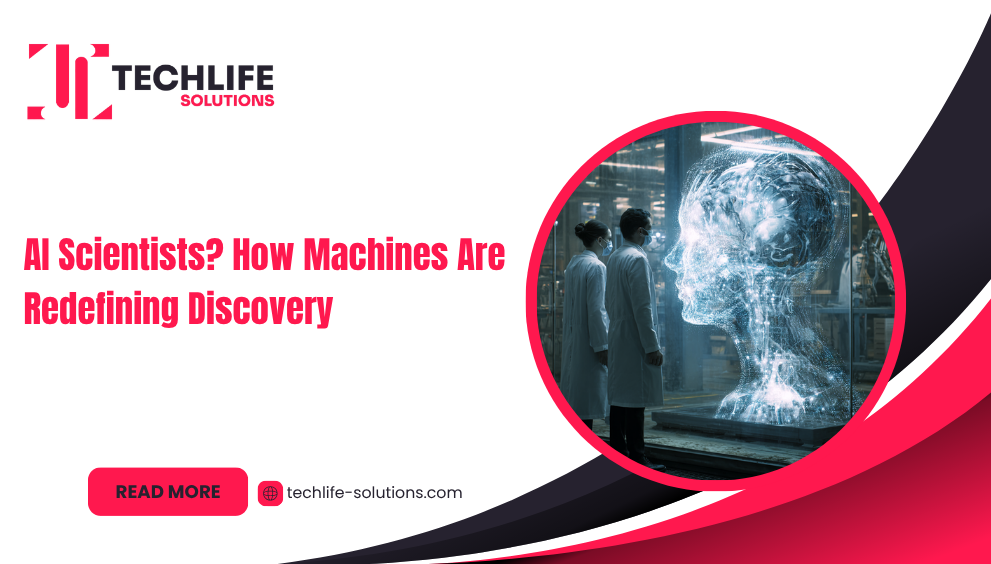
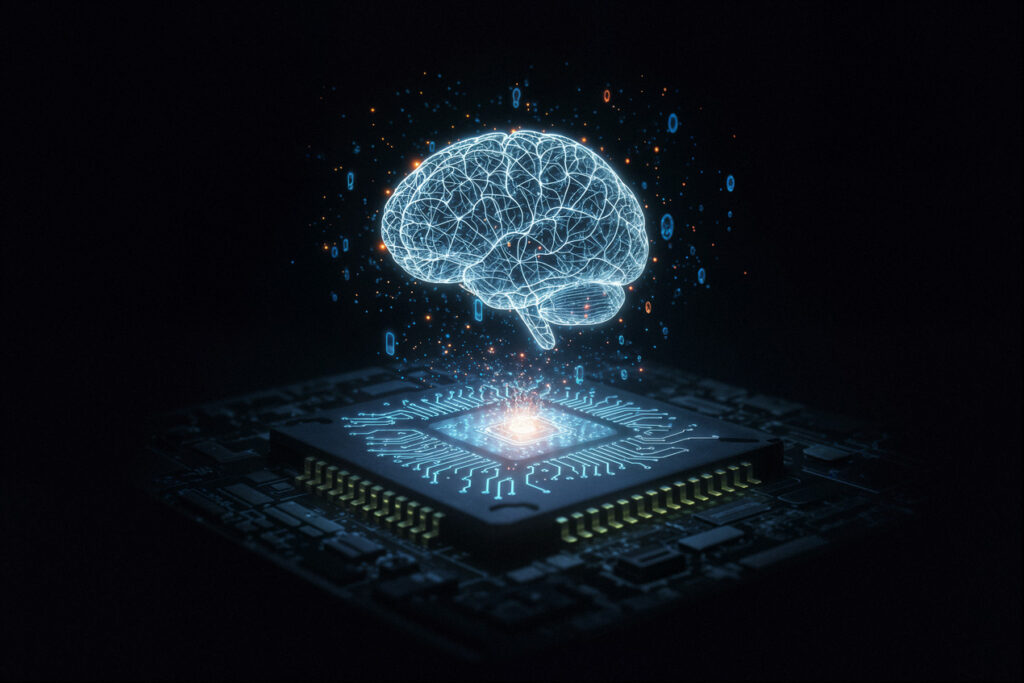
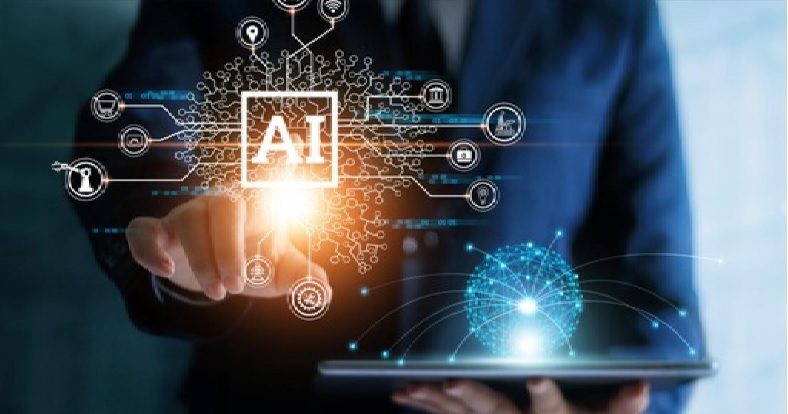
Suppose the next major scientific discovery does not result from a scientist but instead a machine? That would sound absurd, however, it is happening right now. Artificial Intelligence (AI) is changing how discoveries are made.
Whether discovering new medication, diagnosing diseases at an early stage, or forecasting climate change, AI is changing scientific research.
It is not just a decision-making tool or assistant for scientists anymore; in many ways, it is becoming a scientist itself.
How AI Is Changing Scientific Research?
Data is essential for science, and there’s too much of it today. Millions of research articles, limitless experimentation, and never-ending data generation from laboratories around the world. An individual scientist cannot possibly sift through all this data in a lifetime.
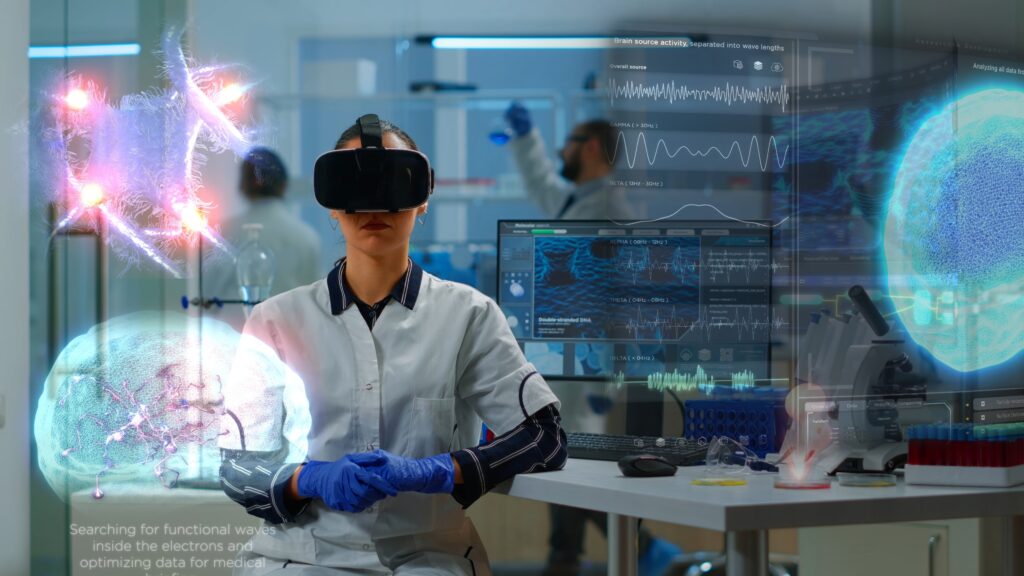
AI in scientific research solves this problem. It can read, process, and uncover patterns in a vast ocean of data in a matter of minutes. AI can connect dots that humans would not have even considered.
AI in Drug Discovery: Finding Medicines Faster
Finally, we will discuss how AI is critical for drug discovery – a transformative shift likely to enhance how health care is delivered in the future. In the past, developing a new drug could take around 10 to 15 years and could cost billions of dollars. Most of that time was spent determining whether just some combination of chemicals would work. Because of AI that time can now be truncated to just a fraction. AI will take all of the information provided in and look at chemical data, compounds, and behaviors of molecules. Another study published in Nature Biotechnology in 2023 was published which stated that through the use of AI in drug design there was greater than 30% improvement in the early-stage success rate. In turn, that means that more treatments will reach more people faster than in the past and at a lower cost to the consumer.

AI in Medical Research: Smarter Healthcare
When considering AI-integrated into medical research, it relates to how AI provides physicians and scientists with a more accurate and timely understanding of diseases. Hospitals are already using AI to:
- Identify cancer in medical images much earlier than a human can.
- Forecast future heart complications years before you show symptoms.
- In some cases, recommending novel therapies based on an individual’s DNA sequence.
As an example, Google Health developed an AI tool to diagnose breast cancer within mammograms with greater accuracy than trained professionals could.

A study published in the journal Lancet in 2024 demonstrated a 40% increase in accuracy of early disease diagnosis for various topical AI technologies, namely cancer or brain diseases. This isn’t the future; this example is here and happening now.
Humans + Machines = A Perfect Team
So does this mean that AI will replace researchers?
Not even close.
AI is very powerful, but it does not even really grasp the “why” of something. Think of it this way: AI can do the heavy lifting- doing the data, doing the calculations, making the predictions- while humans are doing the creativity, the ethics, and the imagination.

Together, they are a perfect pair of scientists.
AI might give you 1,000 potential answers. Yet a human is the only one that can look at those answers and say, “That one could save lives.” This is similar to how AI is powering next‑generation systems in other fields like tech and consumer devices.
Challenges and Ethics
Of course, we face many issues with AI in science. One big question is: What if the AI makes an incorrect diagnosis? What if the AI is trained on biased data? These are tough questions to think about.
So, now organizations like the World Health Organization (WHO) are establishing global standards for the responsible use of AI in health care, and making sure these standards have equity, transparency and a constant emphasis on being human-centric.
Ultimately, science should be undertaken for the sake of humans, and likewise AI.
The Future of Discovery
In the coming years, you will see AI do things like the following:
- Developing new materials for sustainable energy.
- Predicting the next epidemic before it occurs.
- Managing 24/7 robot labs that can run thousands of experiments simultaneously.
- How we discover new things has changed completely.
FAQs
1. In what ways is AI assisting with research?
AI assists with analyzing large amounts of data, identifying undiscovered trends and discovering the unknown more quickly across multiple disciplines including biology, physics and chemistry.
2. In what ways is AI being used in drug discovery?
AI identifies which chemical compounds could be developed into an effective drug candidate potentially shortening the time to discovery from years (or never) to months (or weeks).
3. In what ways does AI aid in medical research?
AI is used to assist in predicting a diagnosis for doctors and researchers, interpreting medical imaging/scans, and in developing personalized treatment plans for individual patients.
4. Will AI replace scientists?
AI will not replace scientists. It is a tool scientists and researchers can use to be more efficient and productive. However, there are ways that AI cannot be used for sciences – for example, AI cannot create art, make difficult or complex decisions, and it cannot understand ethical behavior, levels of observations and understanding, and the nuances of human experience/thought processes that come with many study methods that scientists still do on their own, outside of AI use.
5. What are the benefits and/or drawbacks to AI in research?
Some of the issues are mostly bias of data, there is a current lack of transparency, accountability, and an understanding of the problem. AI use also requires that humans still need to be involved to ensure processes stay safe/ethical processes. AI is not meant to take the place of humans – it is meant to be a tool where it can deliver results, however, the thought processes must still include human oversight to ensure the progress of developing processes remains safe and ethical processes.
Final Words
Artificial intelligence is not simply robotics or programming anymore; it has truly become a part of how we learn, treat, and create.
In aiding doctors with disease detection, chemists with drug design, and scientists grasping months of millions of data points; AI is turning dreams into discovery!
But the most important part of any discovery will always be human- as curiosity, compassion, and creativity are things that no program will one day replace.
AI is the future of science; humans are the reason science exists.