












































































































From Quantum Chips to Brain Tech: Breakthroughs Shaping Science in 2025

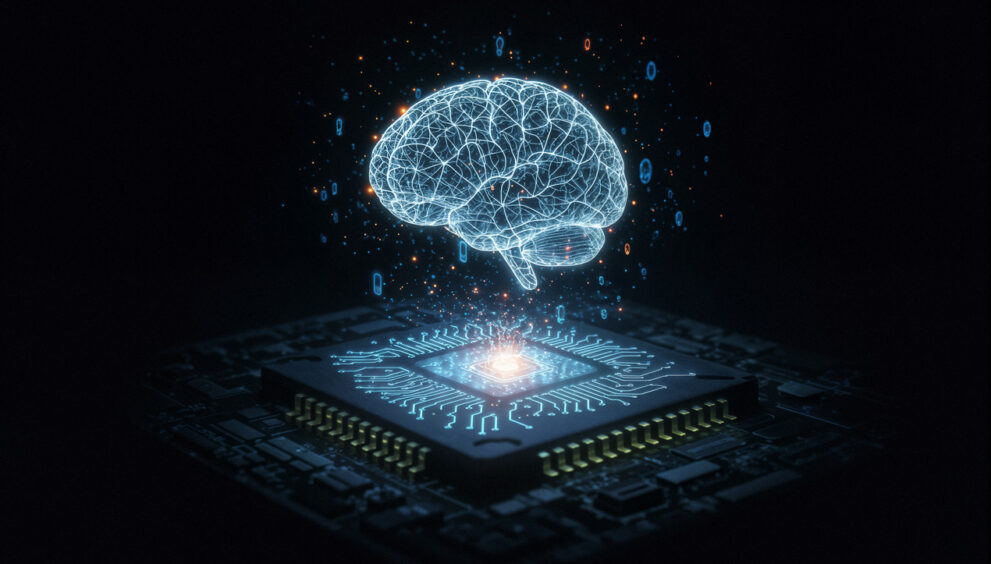
There are times in history when technological progress stops advancing with baby steps and then leaps ahead. The year 2025 seems like one of those times, where we are witnessing breakthroughs that we never thought would become reality.
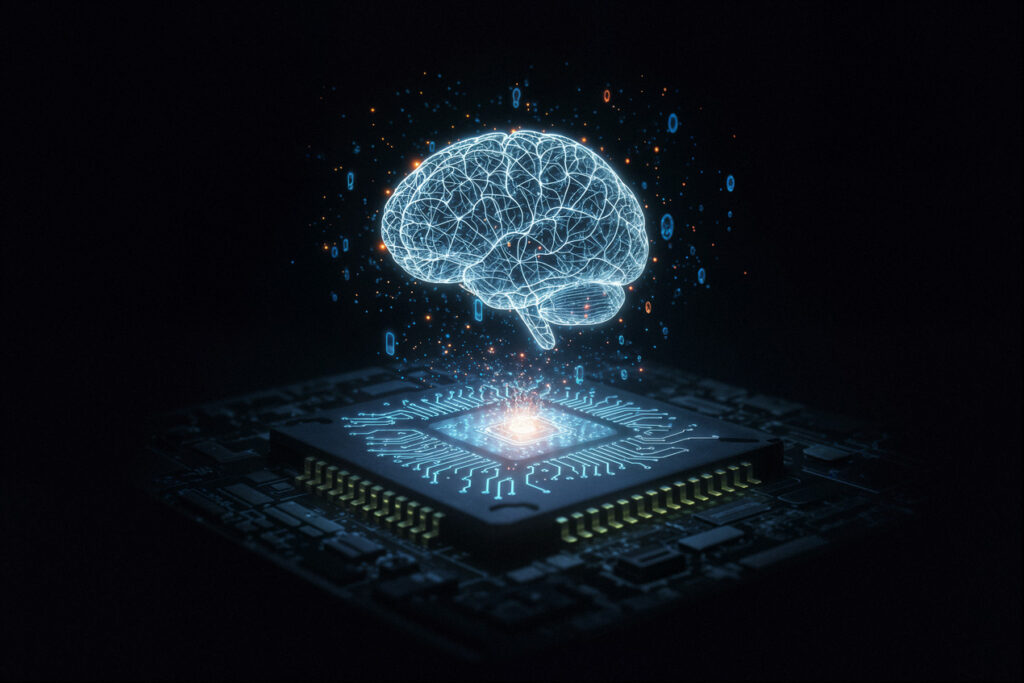
On the one hand, we have quantum computers that are able to solve problems that traditional computers never could; and on the other, we have brain-computer interfaces that allow humans to control digital devices and machines using only their thoughts.
Both fields are still developing, but 2025 is a significant inflection point. Quantum chips are progressing more quickly than expected, and brain technology is moving from laboratory research into real-world medical and practical use.
They are no longer science fiction ideas; they are happening today, and they are part of the world we will walk into.
In this blog, we’ll look at both of these breakthroughs in simple language, assess how the world has turned since last year, and speculate in terms of how they may impact how we live our daily lives.
Quantum Computing 2025: A Different Kind of Machine
For many years, all computers have operated in the same way. It doesn’t matter if you use a phone, a laptop, or a supercomputer which all have an internal machine and process information with bits that can be only 0 or 1. This is called classical computing and it underpinned the entire digital revolution. However, it does have limitations.
Quantum computers are different. Quantum computers operate with qubits (quantum bits) instead of bits. A qubit can be a 0, or a 1, or both at the same time. That is what allows a quantum computer to do multiple calculations at the same time and to explore many options at once. This is something even the best classical computers cannot do.
A Year of Progress
In the past, quantum computing existed primarily in a laboratory setting. The machines themselves were either too short-lived, too small, or too sensitive to temperature changes, electromagnetic noise, etc. The actual operation of these machines required the room to be controlled in a very precise way.
In 2025, this is all changing. Firms like IBM, Google, IonQ, and various new startups, are developing quantum chips that are more stable, more powerful, and performing better than ever. These types of systems that would previously require massive setups now run, more reliably, and process many more qubits at once.
Error Correction is a Game Changer
The biggest challenge in quantum computing has traditionally been error correction. Qubits are fragile, so it doesn’t take much disturbance for a calculation to collapse. This is ultimately why it was not feasible to build a larger more powerful quantum computer before.
However, there has been a lot of progress in 2025. Firms and research labs have developed new approaches to error correction and chip design that would improve the stability of qubits. This progress is a major reason quantum computing is finally moving beyond being a purely experimental platform.
Real-World Uses Have Started
Real-World Applications Are Starting
For the first time, quantum computers are being used for real applications outside of research labs. Some of the initial fields in which they are having an impact include:
- Medicinal and drug development
- Climate modeling
- Building and identifying financial risk
- Materials engineering
- Cybersecurity
Although quantum computers are not going to replace classical computers any time soon, they have begun to address and resolve issues that would take classical computers years, if not centuries, to solve.
How Quantum Computing Might Affect Daily Life
While quantum computing is still in its infancy, its effects may be seen in our daily lives more quickly than we imagine.
Cybersecurity is going to see a major shift
The world’s encryption systems today, including those protecting your online banking and personal information, operate on mathematical problems that classical computers perform poorly.
Quantum computers could crack many of today’s encryption systems in minutes. This means the world will need new types of encryption that hold in the presence of quantum attacks. Research is underway to develop quantum-proof security.
New Medicines Could Be Developed in Less Time
Instead of experimentally testing hundreds or even thousands of chemical combinations, a quantum computer can simulate these combinations virtually, then observe how they react. This could lead to significant reductions in the overall time to develop new therapies and reduced cost for medical research.
Artificial Intelligence is Getting a Boost
Many problems for AI, especially those involving very large datasets, become much easier for quantum systems. Larger and more complex educational machine learning models can be trained much faster, resulting in more breakthroughs in automation, robotics and intelligent systems.

Quantum computing won’t directly reach everyone first, but the eventual impact of it – better medicines, more powerful AI, safer digital systems – will be apparent.
Brain-Computer Interfaces: Technology That Connects Mind and Machine
Just as quantum computing is revolutionizing machines, brain-computer interfaces are revolutionizing people. These devices, colloquially referred to as BCIs, or brain interfaces, facilitate direct communication between the brain and a digital interface.
BCIs use sensors to detect neural signals and convert them into commands a computer can understand. The outcomes of this technology are extraordinary.
People who are unable to speak or move otherwise can communicate with BCIs or control devices with them. Paralyzed patients can move robotic limbs using just their minds. Researchers are studying ways to help restore vision, memory, and other abilities. This is why brain tech is called one of the greatest medical and technological advancements of our time.
How Brain Interfaces Work
There are primarily two types of brain-computer interfaces.
Non-Invasive Systems
These systems utilize devices like EEG headsets that are worn on the scalp; they collect electrical activity, but only from outside the skull. They do not require surgical implantation, but they provide less data compared to implanted systems. Non-Invasive BCIs are currently in use for neurotherapy, mental training, and basic control of digital devices.
Invasive Systems
Invasive systems require implanted devices that are placed directly into the brain. Invasive systems can collect a much richer data stream and give users a lot more control. Companies such as Neuralink and Synchron are conducting clinical trials where individuals with paralysis use implanted BCIs to enable them to type on a computer screen, browse the internet, or communicate at meaningful rates.
This can be truly life-changing for a person that has lost the ability to move or speak.
Where These Technologies Meet
While quantum computers and brain-machine technology are distinct, their trajectories could lead to interaction. The human brain is incredibly intricate, and classical computers continue to struggle to model it accurately. Quantum computers, with their multidimensional computing capabilities, may allow for the first real simulation of neural networks.
Imagine a future where:
- A brain-machine interface interacts with a quantum computer that runs AI
- Neural data is processed in the blink of an eye
- Human-machine interactions are fluid
This does not just change the prospects for healthcare, communication, education and personal productivity – it changes everything.
What Life Might Look Like by 2030
If progress in 2025 continues, we could expect:
For everyday users
Devices that respond to gestures, facial expressions, or even brain signals. Better cybersecurity thanks to quantum encryption. Smarter assistants that recognize context and behavior.
For medicine
Quicker treatment developments, novel management approaches for neurological disease, and autonomous assistive technology for those who currently rely on caregivers.
For science and engineering
Quicker discoveries in chemistry, material science, climate research, and artificial intelligence.
The world could change surprisingly quicker than anyone can envision.
Final Thoughts
Quantum computing, along with brain-computer interfaces, stand out as two of the most important scientific developments of our time. In 2025, both of these technologies are maturing past experimental science into something more practical, impactful and scalable.
We are seeing the early stages of a future where computers do not simply perform calculations faster – they comprehend more. And humans do not merely leverage technology – they may one day seamlessly integrate with it.
The coming years will likely determine how these systems are used, how they are regulated, and how they are assimilated into society. What we do know is that we are experiencing one of the most dramatic transitions in modern science, and the world on the other side will be significantly different than the world in which we grew up.